

Can a hypnotist make you do anything? It’s one of the first questions people ask when they find out what I do for a living. Usually right after “have you ever made someone cluck like a chicken?” The short answer is no. The longer answer is way more interesting than that.
Can a Hypnotist Make You Do Anything Against Your Will?
Let’s get this out of the way. No hypnotist on the planet can override your free will. Not me, not the guy on YouTube with the dramatic music, not the therapist with the swinging pocket watch. Your subconscious mind has a built-in security system that’s been running since the day you were born. It filters every single suggestion through your personal values, beliefs, and moral code. If something doesn’t line up, the suggestion gets rejected. Automatically. No exceptions.
I’ve been performing stage hypnosis shows for over two decades. Thousands of volunteers. And in all that time, not one person has ever done something on stage that genuinely violated their core beliefs. They might dance, sing, or pretend to be a rockstar. But that’s because part of them wanted the permission to let loose. Hypnosis didn’t force them. It gave them an excuse.
Think of it this way. You know that feeling when you’re at a party and the music is good and you want to dance but you’re too self-conscious? Hypnosis turns down the volume on that inner critic. It doesn’t rewrite your personality. It just loosens the grip your overthinking brain has on your behavior.
If you’re wondering whether the people on stage are just acting, I break that down, with the Stanford brain-scan research, in is stage hypnosis real.
So Why Do People Do Wild Things on Stage?
This is the part that trips everyone up. If hypnosis can’t force you, why do people at my corporate events and live shows do things they’d never normally do? Two reasons.
First, selection. Before any show, I run a series of suggestibility tests. I’m looking for people who are naturally open, imaginative, and ready to have fun. The people who end up on stage aren’t random. They’re the ones who walked in hoping to be picked. They want the experience. That willingness is everything.
Second, social permission. A stage, an audience, a professional hypnotist saying “it’s okay to be silly right now.” That combination creates a safe container where people feel free to act differently than they would at work or at the grocery store. It’s not mind control. It’s context.
The volunteers at my shows are having the time of their lives because they chose to participate. Nobody gets dragged up against their will. And anyone who doesn’t respond to suggestions simply sits back down. No drama.
What Hypnosis Can Do (and It’s More Impressive Than Mind Control)
Here’s what’s funny. People get so fixated on whether hypnosis can “make” you do things that they miss what it’s genuinely capable of. And the real applications are far more useful than making someone cluck like a chicken.
Clinical hypnotherapy helps people quit smoking, manage chronic pain, reduce anxiety, and sleep better. It works because you’re cooperating with the process. You want the change. The hypnosis just helps your subconscious get on board with what your conscious mind already decided. That’s a partnership, not a hostile takeover.
On the entertainment side, a great comedy hypnosis show creates memories that last years. I still get emails from people who were on stage a decade ago telling me it was the best night of their lives. Not because I controlled them. Because I helped them experience something they didn’t know they were capable of.
The Hollywood Problem
Most of the fear around hypnosis comes from movies. The villain hypnotizes someone into becoming an assassin, robbing a bank, or forgetting their entire identity. Great cinema. Terrible science. Real hypnosis looks nothing like that. You’re aware the entire time. You can hear everything. You can open your eyes and walk away whenever you want. It’s closer to a deep meditation than anything you’ve seen in a thriller.
If you’re curious about what a real hypnotist does versus what the movies show, the gap is enormous. And honestly, the reality is more fascinating.
Richard Barker’s Final Thoughts
After 20+ years of hypnotizing people on stages, at corporate events, and in private sessions, I can tell you with complete certainty: nobody does anything under hypnosis they don’t want to do. Your mind is yours. Always has been, always will be. The real magic isn’t control. It’s what happens when someone finally gives themselves permission to let go.
Try the Hypnosis Hub App Free
If you want to experience hypnosis for yourself, the Hypnosis Hub app is the easiest place to start. It includes a free guided breathing program to calm your nervous system on demand, plus a full hypnosis audio session designed to help you sleep deeper and break the insomnia cycle. No subscription required to try it.
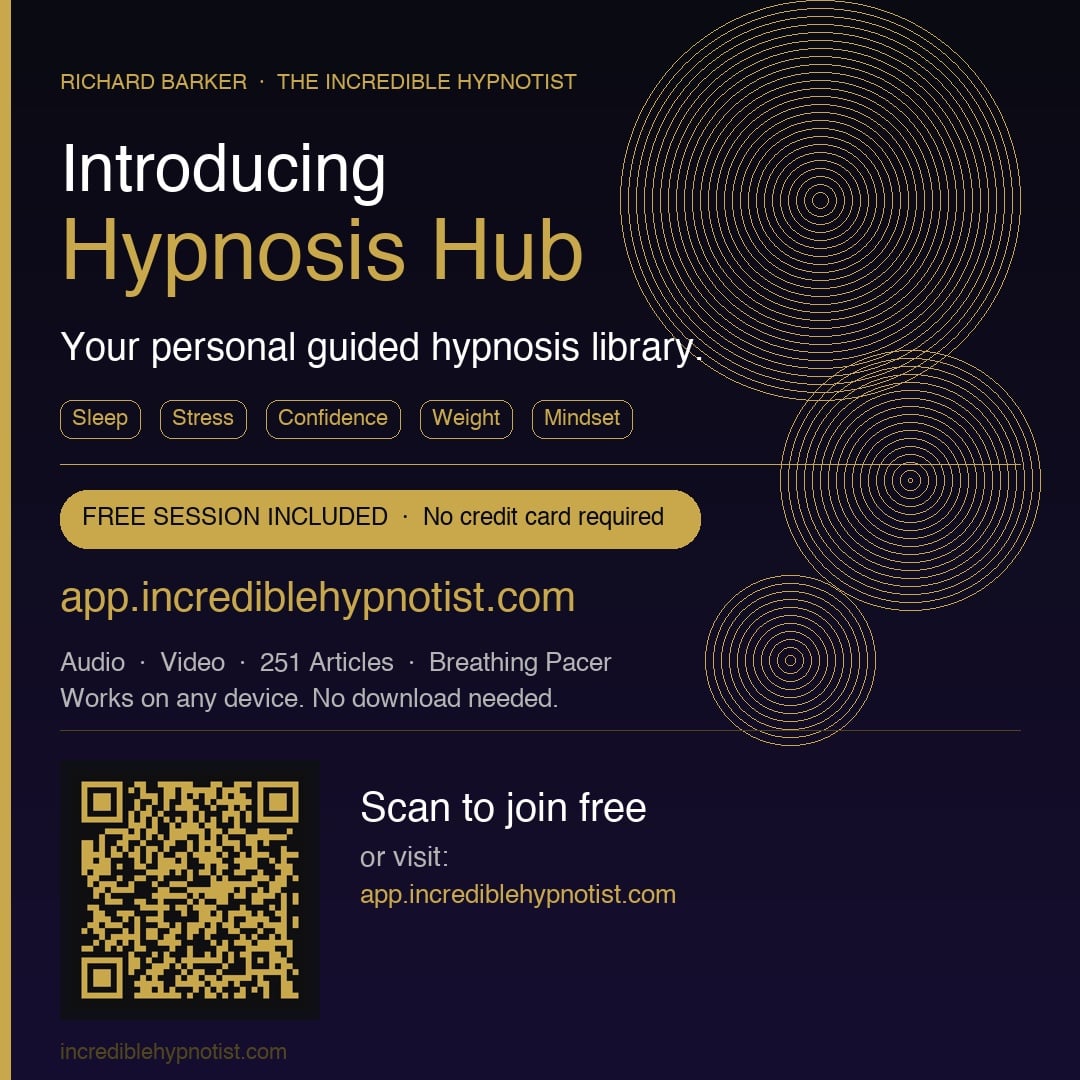
Download Hypnosis Hub Free — or scan the QR code above from your phone.
Can a Hypnotist Make You Do Anything FAQs
Can a hypnotist make you reveal secrets?
No. You remain fully aware during hypnosis and retain control over what you say. Your subconscious protects private information the same way it does when you’re fully conscious. If you don’t want to share something, you won’t. A skilled hypnotist won’t even try because it simply doesn’t work that way.
Can you get stuck in hypnosis?
Absolutely not. Hypnosis is a natural state similar to deep relaxation or focused daydreaming. If a hypnotist stopped talking mid-session, you’d either fall asleep naturally or simply open your eyes and go about your day. There is no “stuck” setting. Your brain doesn’t work that way.
Is stage hypnosis fake?
Stage hypnosis is real, but it’s often misunderstood. The volunteers genuinely experience an altered state of heightened suggestibility. They’re not faking it and they’re not being forced. They’re willing participants who were selected for their natural responsiveness. The entertainment comes from genuine reactions, not scripts.
Can everyone be hypnotized?
Most people can experience some level of hypnosis, but depth varies significantly. About 10-15% of the population are highly suggestible, while roughly 10% are very resistant. The rest fall somewhere in between. Willingness, trust, and the ability to relax and focus all play a role in how deeply someone responds.
