

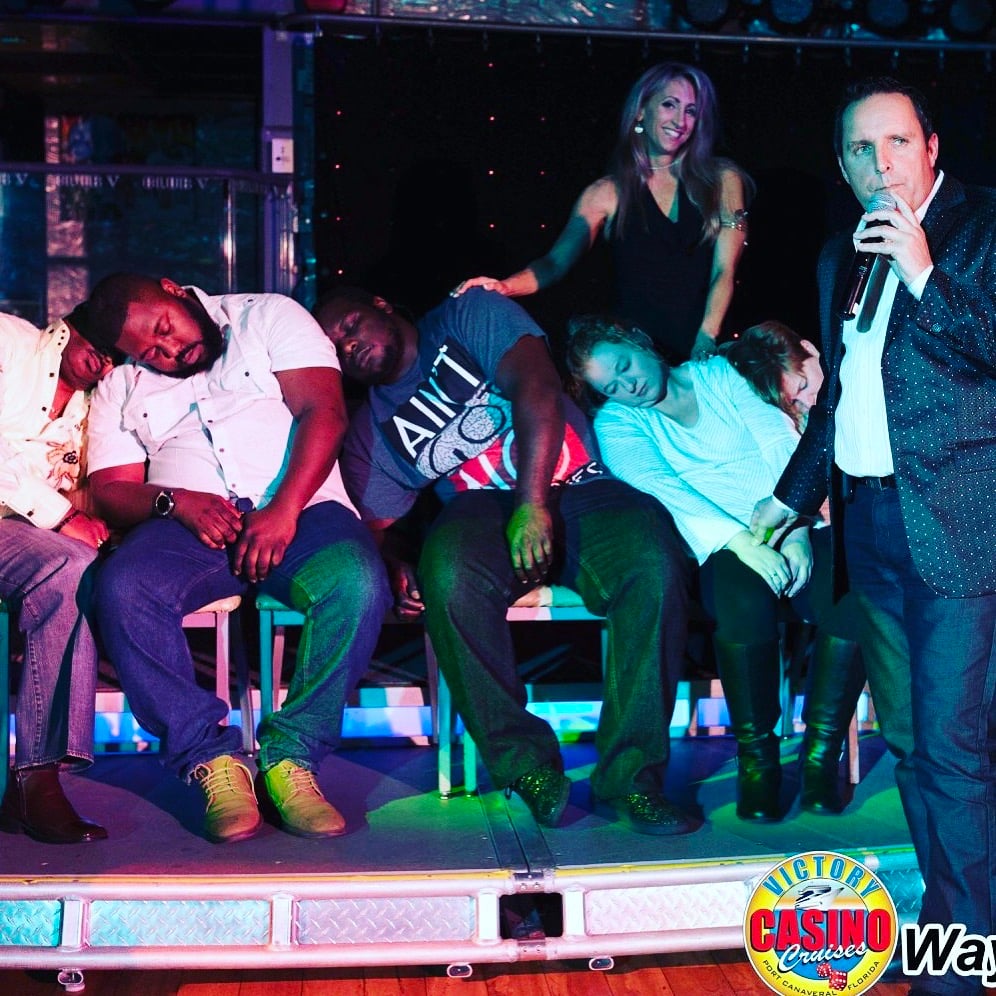
Is stage hypnosis real or fake? It is the single most common question I hear after every show. People watch their friends do outrageous things on stage and cannot believe what they just saw. So let me give you the straight answer from someone who has hypnotized tens of thousands of people on stages around the world.
Is Stage Hypnosis Real or Fake? The Short Answer
Stage hypnosis is absolutely real. The volunteers on stage are not actors. They are not paid plants. They are not faking it to get attention. What you are watching is a genuine altered state of consciousness where the subconscious mind becomes highly responsive to suggestion. It is the same psychological phenomenon used in clinical hypnotherapy offices around the world, applied in an entertainment context.
Watch me break this down in this short video:
Why People Think Stage Hypnosis Is Fake
The skepticism makes complete sense. When you watch someone on stage who genuinely believes they are a chicken, or that their name has disappeared from their memory, or that the person next to them is invisible, it looks impossible. Your logical brain says there is no way that can be real.
Here is why the doubt creeps in:
- It looks too entertaining to be real. People associate hypnosis with quiet therapy offices, not belly-aching laughter. But hypnosis is simply a tool. How it gets used depends on the context.
- Hollywood has distorted expectations. Movies show hypnotists controlling people against their will with a swinging watch. That is fiction. Real hypnosis requires willing participation.
- Some volunteers seem too willing. Critics assume volunteers are just playing along for attention. In reality, the selection process filters for the most hypnotically responsive people in the room.
What Actually Happens During a Stage Hypnosis Show
During a comedy hypnosis show, the hypnotist guides volunteers into a state of focused relaxation called a trance. This is not sleep. The volunteers are fully aware of their surroundings. They can hear the audience laughing. They can choose to open their eyes and walk off stage at any time.
What changes is their relationship with their imagination. In a hypnotic trance, the subconscious mind accepts suggestions more readily. When I suggest that a volunteer is the world’s greatest guitar player, their subconscious runs with it. They are not pretending. In that moment, they genuinely experience the reality of being a rock star. The logical, critical part of the brain that would normally say “this is ridiculous” steps aside temporarily.
This is the exact same mechanism that makes your heart race during a scary movie even though you know you are sitting safely in a theater. Your subconscious responds to the suggestion while your conscious mind takes a back seat.
The Volunteer Selection Process Proves It Is Real
One of the strongest pieces of evidence that stage hypnosis is real is the selection process itself. A professional hypnotist does not just grab random people and hope for the best. The show begins with suggestibility exercises that test the entire audience.
I typically start by asking everyone to clasp their hands together and imagine they are glued shut. The people whose hands genuinely stick together are the most hypnotically responsive individuals in the room. These are the people I invite on stage. Not because they are good actors, but because their subconscious minds are naturally receptive to suggestion.
Roughly 10 to 15 percent of any audience is highly suggestible. Another 70 percent can achieve moderate trance states. The remaining percentage are naturally resistant. This distribution is consistent across every show, every audience, every country I have performed in. If it were fake, those numbers would not hold.
Can Hypnotized People Really Not Remember What Happened?
Sometimes. Post-hypnotic amnesia is a real phenomenon where volunteers have difficulty recalling specific events from the trance state. Some volunteers remember everything clearly. Others have a foggy, dream-like recollection. A small percentage genuinely cannot remember what they did on stage until someone shows them the video.
The degree of amnesia depends on the depth of trance and the individual’s suggestibility. It is not something the hypnotist forces. It is a natural byproduct of deep hypnotic trance that varies from person to person.
What Volunteers Say After the Show
The most convincing proof comes from the volunteers themselves. After a hypnosis show, volunteers consistently describe the same experience: they knew where they were, they could hear everything, but the suggestions felt completely real in the moment. They did not feel controlled. They felt like they were choosing to go along with something that felt genuinely fun and natural.
Many volunteers are shocked when they see video footage afterward. They remember enjoying themselves but had no idea how animated or hilarious they were on stage. That disconnect between their internal experience and their external behavior is a hallmark of genuine hypnotic trance.
The Science Behind Stage Hypnosis
Hypnosis is not pseudoscience. Brain imaging studies have shown measurable changes in brain activity during hypnotic trance. The anterior cingulate cortex, which monitors conflicts between what you believe and what you experience, shows reduced activity. The prefrontal cortex, responsible for critical thinking and decision-making, becomes less dominant. Meanwhile, areas associated with imagination and sensory processing become more active.
These are not changes someone can fake by playing along. They are observable, measurable shifts in how the brain processes information. The American Psychological Association recognizes hypnosis as a legitimate therapeutic tool, and the same principles apply whether hypnosis is used in a corporate entertainment setting or a clinical office.
Richard Barker’s Final Thoughts
After performing thousands of shows across the United States and internationally, I can tell you without hesitation that stage hypnosis is 100 percent real. The volunteers are real people having a real experience. The laughter is genuine. The reactions are unscripted. And the look of amazement on their faces when they come out of trance is something no actor could replicate. If you want to see it for yourself, book a show and watch your own friends and colleagues prove it is real.
Stage Hypnosis Real or Fake FAQs
Are the volunteers in a stage hypnosis show actors?
No. Volunteers are real audience members selected through suggestibility tests at the beginning of the show. A professional hypnotist identifies the most naturally responsive people in the room and invites them on stage. They are not planted or paid.
Can a hypnotist make you do something against your will?
No. Hypnosis requires willing participation. Volunteers can open their eyes and walk off stage at any time. The subconscious mind has built-in safeguards and will reject any suggestion that conflicts with a person’s core values or boundaries.
Why do some people seem to go deeper into hypnosis than others?
Hypnotic suggestibility varies naturally across the population. About 10 to 15 percent of people are highly suggestible, meaning they enter deep trance states easily. This has nothing to do with intelligence or willpower. It is simply how their brain processes suggestion.
Is stage hypnosis the same as clinical hypnotherapy?
The underlying mechanism is identical. Both use focused relaxation and suggestion to access the subconscious mind. The difference is context: clinical hypnotherapy targets therapeutic goals like anxiety or habit change, while stage hypnosis uses the same principles for comedy entertainment.
Do volunteers remember what happened during the show?
It varies. Some remember everything clearly, others have a foggy dream-like recollection, and a small percentage experience genuine amnesia until shown video footage. The degree of memory depends on trance depth and individual suggestibility.
